From Little Village to Soldier Field: Inside Gente Fina’s Chicago Fire Capsule
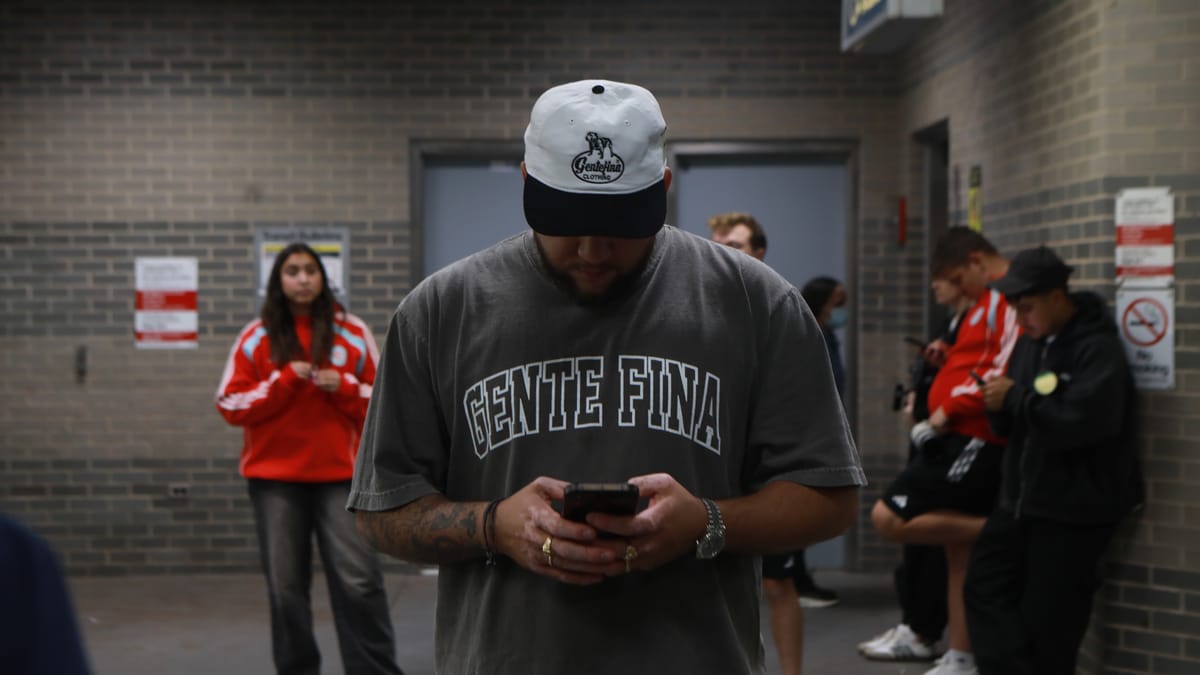
On the South and West Sides of Chicago, workwear is a language. Emmanuel “Manny” Cabrera speaks it fluently, then stitches it into something refined. His label, Gente Fina, is the city’s everyday grit cut from “Very Midwestern blue collar mixed in with luxury fabrics. Definitely Midwestern.” That is how he defines the brand in a sentence, and you feel it in the pieces. Heavy canvases and leathers for longevity. Silhouettes that work in lake-effect cold and look right at dinner. “Being here in Chicago, you never know what the weather’s gonna be like. So we try to be prepared for just about anything,” he says.
Cabrera did not take the fashion school route. He drove trucks, ran a cargo supply shop, and taught himself to sew. The discipline that got him through long hauls turned into the discipline to build a label. “The trucking world taught me a lot of things… the main thing is hard work. You know, sacrificing getting up super early, you know, just that discipline that required for you to complete the job in a timely manner… it gives you that grit,” he says. The brand’s name, Gente Fina, literally reads as “fine people,” but in Cabrera’s hands it is about the pride of immigrant families and a city that made him.
The design language comes from lived geography. “You could definitely see a lot of Little Village… very Latino-heavy neighborhoods, Humboldt Park. I lived there for quite a bit as well,” he says. A hip-hop past shows up, too. “All those things combined… moving around Chicago definitely has helped me to be able to kind of build a collection that all of Chicago can mess with,” he says. His goal is simple and specific: make garments that belong at the airport and in the nicest restaurants in the city, not souvenir tees for a drawer.
That clarity is why the Chicago Fire collaboration feels earned. Cabrera did not drop a cold email and get an instant green light. “To be honest, the Chicago Fire collab has been ongoing for maybe the last two and a half years,” he says. There were reorgs, new creative leads, and the usual corporate hurdles. He kept showing up. “This time I came with a collection already drawn up…different versions of the jacket, different versions of the polos, different versions of the T shirts. I came prepared this time,” he says. The club finally moved. “They’re like, alright. This has to happen this year. This collection is beautiful.”
“When you read my jacket tags and it says, 'designed by a Mexican' I want people to really understand that, because that’s really important.”
When asked about the crown jewel of the collection, the choice was clear for Manny, the varsity jacket. “The jacket, the 100% wool and the leather sleeves with the flames stitch on the sleeves, that was something that I’ve been wanting to do for them for a while now,” he says. Seeing it in person was the moment it became real. “It just blew my mind,” he says. The fans had their own favorite. “The baby blue, the light blue jersey sweater… sold out in minutes.” Even with the sellouts, you can hear Cabrera’s bias. “It’s always the jackets,” he says. The goal is to make something you have not seen before and tie it so tightly to a moment that it can't be replicated.
The launch mattered because the club didn't phone it in. “They let me do whatever the hell I wanted. They gave me Soldier Field to shoot in, like that’s crazy,” Cabrera says. He is quick to credit the Fire for pushing real resources behind the collaboration. “With the amount of time and money the Chicago Fire put into not just the collection, but the marketing of it… they [teams] don't go above and beyond like the way Chicago Fire did,” he says. “I commend Chicago Fire for keeping the prices pretty affordable as well… it wasn’t about profit for them. It was about making sure that they did this the right way”.
The most resonant details are small, like a care label that reads exactly who the designer is. “When you read my jacket tags and it says, 'designed by a Mexican' I want people to really understand that, because that’s really important,” Cabrera says. His point is not performative. It is a signal for first-generation creatives who need to see someone from their neighborhoods operating at this level. “If I can do it, they can do it”.
Cabrera's advice to the next wave is to keep making, not to over-index on every comment or sales dip, and tell your specific story through familiar forms. “Don't get too caught up on taking things very personal… just design, just create. I didn’t reinvent the jacket or reinvent the hoodie. What I’ve done is simply put my background, my culture, into these pieces that have already been made,” he says. The path was not instant. “I couldn’t give away these jackets when I first started,” he recalls. It took years, risk, and consistency. “Make sure you actually like it… it’s a ton of work, ton of money… So long as the passion is there, it’s gonna work”.
Community shaped the rollout, and community shaped what comes next. Cabrera wants more events, more quantities, and more access. He is mindful of the moment in the city and how that affects turnout. “People were really afraid to come out as much,” he says, noting concerns in immigrant neighborhoods. The solution is to meet people where they are, pair football with food and music, and invite local businesses into the tent. “Chicago has some of the best Mexican restaurants and mom and pop shops… I would love to do some more food and music inspired events… I think there’s a huge opportunity there to really create some dope experiences for the fan base”.
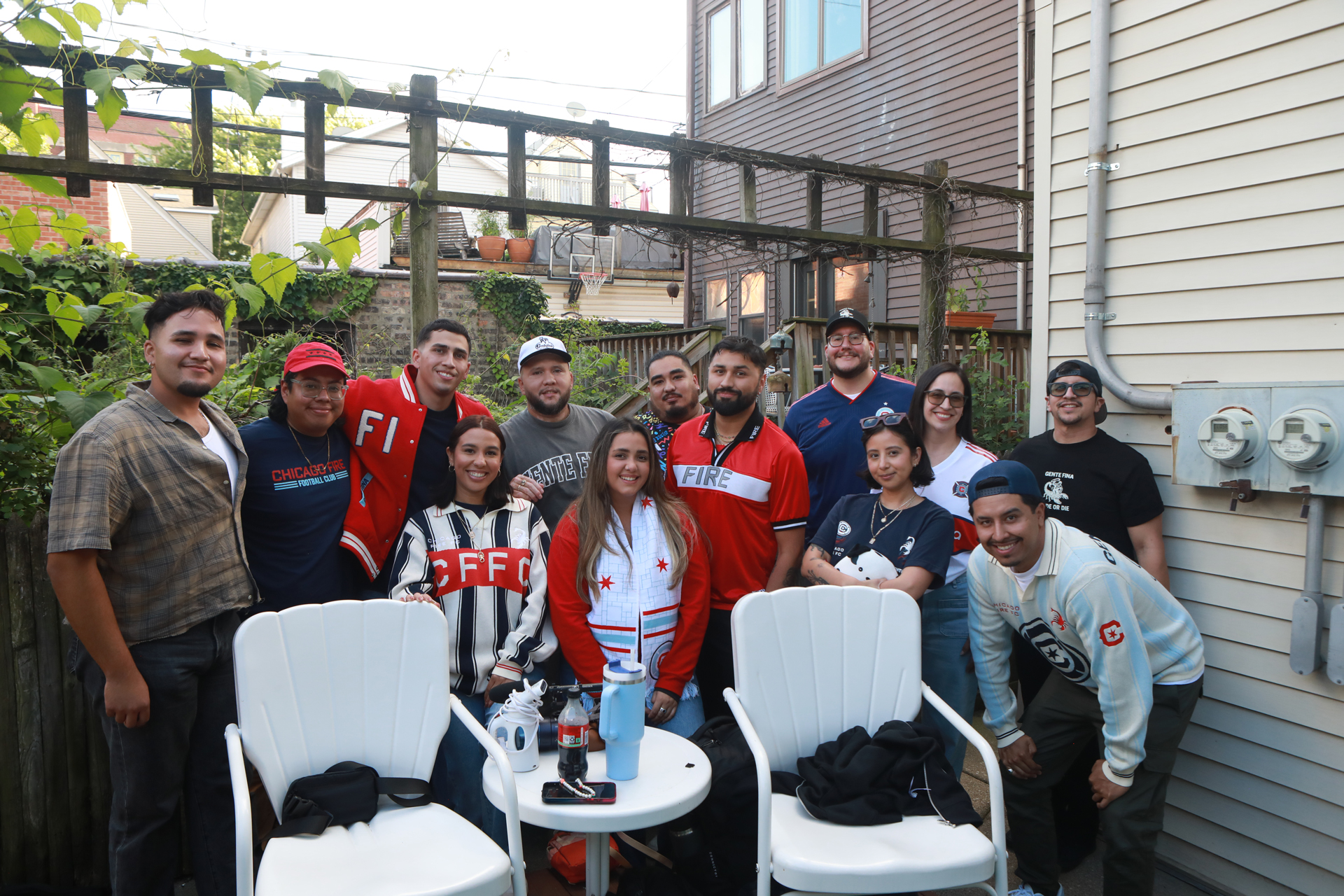
When asked what he would want people to say about this collection in five years, Cabrera doesn't give the typical brand jargon, he taps into identity. “I would I want them to say ‘Hell yeah. A Mexican made that’”.
The line is personal. It is pride that travels from Little Village to Soldier Field and back again. It's a blueprint for how a club can back the people who actually live its colors. And it is a reminder that a jacket can carry more than warmth. It can carry a city.